
Why Transitions Are Hard for Kids and How You Can Help
Transitions can be a tough time for kids. Whether it’s their morning routine, bedtime, or transitioning from one activity to the next in school, it can often be a time for frustrations and meltdowns. Here are some practical tips to help your child during these experiences.

What transition periods can leave kids frustrated?
· Morning Routine
· Bedtime
· Nap Time
· Meals
· One Activity to Another (they are playing with blocks, but story time starts in 5 minutes)
· First Day of School
· A special day at school like a field trip day or holiday celebration
· Moving from one classroom to another as they age up
Why kids might have difficulty with transitions
Transitions can be hard for anyone, but kids can struggle as they are often going from an activity they want to do versus transitioning to an activity they have to do and are being told they must do.

Kids may often struggle with regulating their emotions, which can make transitions challenging. They may also have limited communication skills depending on their age or ability level. Kids also do better when in routine and some transitions aren’t part of a routine such as a field trip day at school or moving from one classroom to another.
Having ADHD or Autism might amplify these issues. According to Brown University Health, children with Autism crave regularity and predictability and don’t always cope with change well. They may also struggle to recognize cues that it is time to transition from one activity to the other. According to Upside Therapy, for children with ADHD, transitioning from one activity to the next requires a lot of executive functioning. Executive functioning helps us plan, organize, and move from task to task. When kids are focused on a task, stopping that task feels like slamming on the brakes. Also, those with ADHD crave stimulation, so moving from a fun task to a less fun task can be difficult.
Sensory processing challenges and anxiety can also make transitioning from one activity to another stressful. The Child Mind Institute says that for kids who are easily overstimulated, they feel like the world moves too quickly so transitions become hard. Anxiety can also lead to fear about switching from one task to the other and not knowing what is coming next.
Strategies to Help
So, what can you do to help kids ease their struggles with transitions?
· Communicate Clearly - Be very clear about when you expect a child to start cleaning up and explain thoroughly to them what activity will be taking place next. Communicate directions clearly so kids know exactly what is expected of them.
· Use the option of choice when available – PBS Kids suggests using the concept of two great choices. “It’s time to get in the car. Do you want to bring a book or listen to a story on tape?” When a child feels like they have control over the matter they’ll be more likely to move to the next activity more easily

· Use visual cues – set a visual timer giving them 5 minutes to wrap up their current task so they can move on to the new task. Brightwheel even suggests using a visual schedule with pictures of children performing each task for the day so kids know exactly when and what is happening.
· Use auditory cues- Brightwheel also suggests using a specific sound such as a bell or a chime to signal when it’s time to clean up and using another sound to move to the next task.
· Allow time – Give kids plenty of time to wrap up what they’re currently working on. Give a 10-minute warning, a 5-minute warning, and a 2-minute warning.
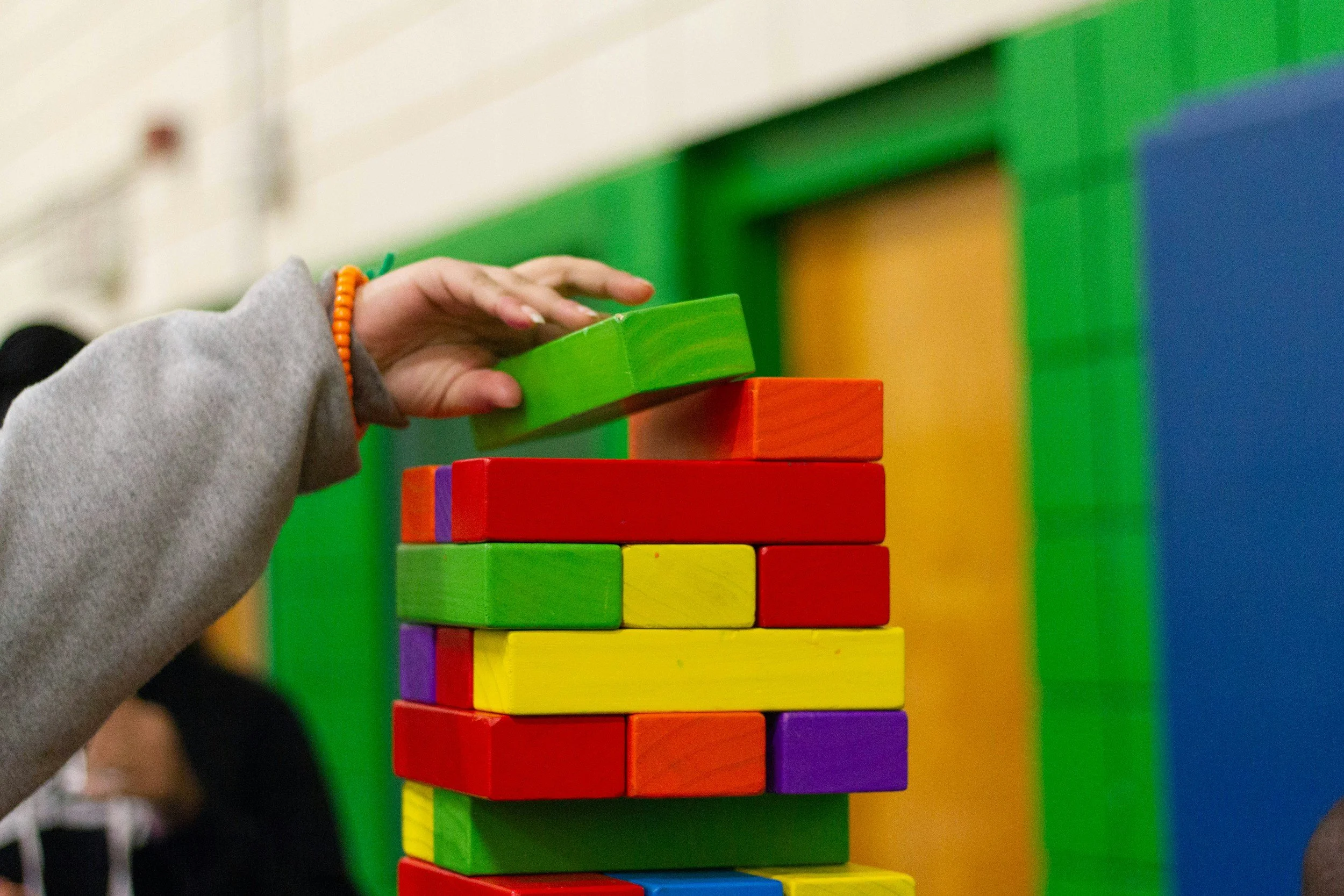
· Turn it into a game and make it fun- Kids love a good competition. “How fast can you pick up those blocks?” Kids also love to be silly. “Let’s squawk like a chicken as we walk to lunch.” You can even sing a song while you’re moving from one activity to the next.
· Use first/then language: “First we wash your hands, and then we can get out the blocks.” “First we’ll put your coat on, then we’ll go outside to play on the playground.”
With clear communication, predictable cues, and a little flexibility, transitions can become calmer and more manageable over time. Every child is different, so it may take some trial and error to find what works best for yours. Be patient with the process, celebrate small wins, and remember that these skills build with practice. The more supported kids feel during transitions, the more confident they become handling change both now and as they grow.
Works Cited
“7 Fun and Engaging Transition Activities for Preschoolers.” Mybrightwheel.com, 22 July 2024, mybrightwheel.com/blog/7-fun-and-engaging-transition-activities-for-preschoolers.
Lerner, Claire . “Smoother Transitions to Help Your Child through Daily Routines |….” PBS KIDS for Parents, 22 Mar. 2019, www.pbs.org/parents/thrive/smoother-transitions-to-help-your-child-through-daily-routines.
Marini, Gina . “Children, Autism, and Change: Tips to Make Transition Easier | Brown University Health.” Brown University Health, 2024, www.brownhealth.org/be-well/children-autism-and-change-tips-make-transition-easier.
Martinelli, Katherine . “Why Do Kids Have Trouble with Transitions?” Child Mind Institute, Child Mind Institute, 26 Feb. 2016, childmind.org/article/why-do-kids-have-trouble-with-transitions/.
“Parenting an ADHD Brain: Why Transitions Are so Hard.” Upside Therapy - and Evaluation Center, Upside Therapy and Evaluation Center, 8 Sept. 2025, upsidetherapy.com/parenting-an-adhd-brain-why-transitions-are-so-hard/. Accessed 12 Dec. 2025.