
What Inclusive Childcare Looks Like in Practice (And Why It’s So Rare)
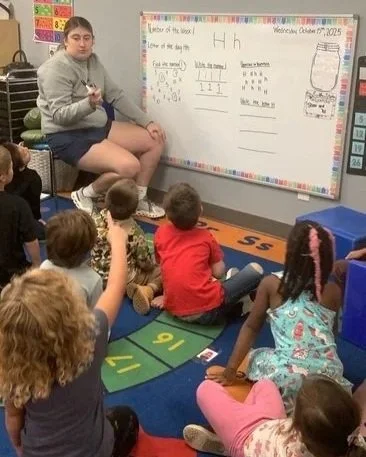
Carrie is in a wheelchair. Ben, her best friend, isn’t. They sit side by side during group time shoulder to shoulder on the classroom rug. They play together on the playground, laughing as they dig in the sandbox together. Carrie being in a wheelchair isn’t something Ben questions or notices in a meaningful way. To him, she’s just Carrie, his friend.
That’s what inclusive childcare looks like in practice.
At Hand in Hand, moments like this happen every day. Children of all abilities learn, play, and grow together, not in separate spaces, but side by side. They’re everyday experiences. And they shape a more empathetic, connected community.
What Does Inclusion Mean
Inclusive childcare is more than access. It’s an intentional, empathetic approach that ensures every child can participate, connect, and thrive.
Shared Activities with Flexible Participation
All children are part of the same activities, but how they engage may look different. One child may communicate verbally, another through gestures or an Augmentative and Alternative Communication device. One may run across the playground while another may navigate it with support. We meet each child where they are.
Adapting the Environment and Not the Child
Our spaces are designed with intention. We have sensory-friendly areas, visual schedules, adaptive equipment, flexible seating, and quiet spaces for regulation.
Encouraging Friendships
Friendships like Carrie and Ben’s aren’t forced, they’re formed by getting to know one another in a shared classroom.
We guide conversations, model respect, and create opportunities for connection so children learn empathy early. These friendships not only benefit childhood development, but shape how future adults understand and include one another.
Providing the Right Level of Support
True inclusion requires more than intention. It requires resources.
At Hand in Hand, 51% of the children we serve need additional support. That means lower staff-to-child ratios, individualized care, and trained staff who can assist with mobility, communication, medical needs, and more.
This is not “extra.” This is what quality care looks like when no one is left out.
Inclusion is a part of who we are. So, why isn’t it standard across all childcare programs?
Why Few Providers Offer Inclusive Care
Funding Gaps Make Inclusion Difficult to Sustain
Inclusive care requires more staff, more training, and more resources.
At the same time, programs that accept Child Care Assistance (CCA), which 40% of Hand in Hand families rely on, receive reimbursement rates that are 35% lower than private pay tuition.
To ensure affordable and accessible services for families who need us, we don’t charge what it truly costs to cover staffing, resources, and overhead costs. We absorb the cost so families can access care because accessibility shouldn’t depend on income. The choice to absorb costs for families means there is a funding gap which we rely on philanthropy to fill.
Barriers to Additional Support Through Medicaid
Iowa currently has a five-year waitlist that prevents many children with disabilities from accessing services when they first need them.
At Hand in Hand, only a portion of children who need support actually receive funding for it. The rest? We serve them anyway.
Because inclusion isn’t conditional.
But without sustainable funding, fewer providers can make that same commitment.
Training and Requirements
Many traditional childcare models aren’t built for inclusion. Requirements like being potty trained by a certain age or lack of medical training can unintentionally exclude children who develop differently or need additional care with things like tube feeding, catheters, diapering, and toileting support.
Inclusive childcare requires specialized training, adaptable systems, and a mindset shift from “can we serve this child?” to “how will we serve this child?”
Inclusive Care’s Impact
Inclusive childcare doesn’t just support children with disabilities. It strengthens outcomes for everyone involved.
Research shows inclusive programs are beneficial for everyone According to a report from Abt Associates, 81 percent of students experienced a positive effect or no effect on their education when in a classroom alongside students with disabilities. Studies even showed that in subjects like math, inclusive schools often scored higher on standardized exams.
The impact goes beyond academics. Inclusion can also have a positive impact on social and emotional skills. Being in an inclusive environment helped people lessen their fears about differences, increased their tolerance for others, increased people’s sense of belonging, and made people more attuned to the needs of others.
This is all preparation for the real world where people of different ability levels and different experiences work together. Being in an inclusive environment is an opportunity for connection and understanding that leads to a more empathetic community overall.
Why It Matters
Inclusive childcare isn’t a niche service. It’s a community resource.
It supports working parents. It empowers children of all abilities. It strengthens the workforce. It builds a more connected Quad Cities. And right now, it depends on collective support to continue.
Hand in Hand has been part of this community since 2000, growing from 40 children in a summer camp to serving hundreds of individuals each year. Through every challenge, one thing has remained constant: a commitment to ensuring no one is left out.
Because this work belongs to all of us.
It’s ours.